Why Your Car Pulls to One Side While Driving
By Dean Sharpe, Owner of Sharpe Automotive – Santee, California
Quick Answer: Why Does a Car Pull to One Side?
If your car pulls to one side while driving, it usually means something is affecting the way the vehicle tracks and handles. Common causes include:
- Wheel alignment issues
- Uneven tire wear
- Low tire pressure
- Brake problems
- Suspension wear
- Steering component issues
A vehicle that pulls left or right should not be ignored. Even if it still feels drivable, the issue can affect tire wear, steering control, braking performance, and overall safety.
At Sharpe Automotive, we help drivers identify the real cause of pulling or drifting before it leads to larger repair issues. If your car isn’t driving straight, it may be time to schedule professional auto diagnostics in Santee and have it properly inspected.
Why This Problem Matters More Than Drivers Think
One of the things I hear pretty often is:
“It’s not that bad — I just have to hold the wheel a little.”
And while I understand why drivers say that, the truth is:
Your car should drive straight.
If it’s pulling left or right, your vehicle is compensating for something that isn’t working correctly.
Sometimes the cause is minor. Sometimes it points to wear in more important steering, brake, or suspension components.
Either way, it’s not something I recommend ignoring for long.
The Most Common Cause: Wheel Alignment Issues
One of the most common reasons a car pulls to one side is a wheel alignment problem.
Your vehicle’s alignment affects the angle of the wheels and how they contact the road.
When alignment is off, you may notice:
- drifting or pulling while driving
- crooked steering wheel
- uneven tire wear
- less stable handling
Alignment issues can happen from:
- potholes
- curb impacts
- suspension wear
- road conditions over time
Even if the vehicle still “feels mostly okay,” poor alignment can wear tires down faster and reduce overall handling quality.
Uneven Tire Pressure Can Also Cause Pulling
Sometimes the issue is simpler than people expect.
If one tire has significantly less air pressure than the others, it can absolutely cause the vehicle to pull to one side.
That’s because uneven tire pressure changes:
- rolling resistance
- steering feel
- contact with the road
This is one of the first things we’d want to rule out.
That said, if tire pressure is corrected and the pulling remains, the problem likely goes deeper.
Tire Wear Can Affect How the Vehicle Tracks
Uneven or irregular tire wear can also create a pulling sensation.
This can happen when tires are affected by:
- poor alignment
- suspension wear
- infrequent rotation
- improper inflation
Sometimes a vehicle will continue pulling even after alignment correction if the tires have already developed uneven wear patterns.
That’s why it’s important to look at the whole picture, not just one possible cause.
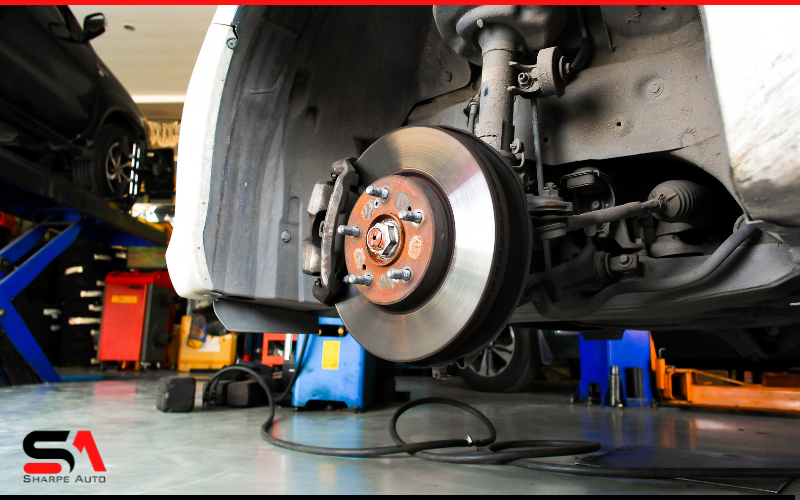
Brake Problems Can Cause Pulling Too
A lot of drivers don’t realize that brake issues can also make a car pull to one side.
If one brake caliper is sticking or not releasing properly, it can cause the vehicle to drift when:
- braking
- coasting
- sometimes even during normal driving
You may also notice:
- brake drag
- burning smell
- uneven brake wear
- one wheel getting hotter than the others
This is one of those issues that can sneak up gradually.
A driver might assume it’s alignment when it’s actually a brake system issue contributing to the pull.
Suspension Wear Can Make the Vehicle Feel Unstable
This is another big one.
Worn suspension components can cause the vehicle to feel loose, unstable, or uneven on the road — especially at higher speeds or during braking.
Parts that can contribute include:
- control arm bushings
- ball joints
- shocks and struts
- tie rods
- sway bar links
When these components wear, the vehicle may no longer hold proper geometry and road contact the way it should.
That can absolutely create a pull or drift.
Steering Component Issues Can Also Be Involved
Sometimes the issue is more directly related to the steering system itself.
If steering components are worn or loose, you may feel:
- wandering
- pulling
- delayed steering response
- looseness in the wheel
This can affect both safety and driver confidence.
And because steering and suspension issues often overlap, this is exactly why it helps to have the vehicle inspected thoroughly instead of guessing.
Why Santee Driving Conditions Can Contribute to This
Like a lot of vehicle issues, local driving conditions can play a role.
In Santee and East County San Diego, vehicles are regularly exposed to:
- uneven roads
- hills and grade changes
- stop-and-go traffic
- heat-related wear
- daily commuting stress
If you regularly drive on roads like:
- Mission Gorge Road
- Fanita Parkway
- Mast Boulevard
- Carlton Oaks Drive
Your steering, tires, and suspension are naturally under more long-term stress than they might be in easier driving conditions.
That doesn’t mean local roads are “causing damage” on their own — but they can absolutely accelerate wear over time.
Is It Safe to Keep Driving If Your Car Pulls?
That depends on how severe the issue is.
A mild pull may not feel urgent, but it still means something needs attention.
And if you notice any of the following along with it, I’d recommend getting it checked sooner rather than later:
- steering wheel not centered
- vibration while driving
- uneven tire wear
- pulling while braking
- instability at higher speeds
- loose steering feel
Even if the problem isn’t dangerous today, it can lead to:
- premature tire wear
- worsening suspension damage
- reduced handling and braking performance
And none of that gets cheaper by waiting.
Why Diagnostics Matter More Than Guessing
This is one of those symptoms that gets misdiagnosed all the time.
A lot of people assume:
- “I just need an alignment”
- “it’s probably the tires”
- “maybe it’s the road”
And sometimes they’re right.
But not always.
A car pulling to one side can involve:
- alignment
- tires
- brakes
- suspension
- steering
That’s why we recommend a full inspection before deciding what the vehicle actually needs.
At Sharpe Automotive, we help drivers get answers instead of guesswork. If your vehicle isn’t tracking straight, it may be time to schedule professional auto diagnostics in Santee so the actual cause can be identified correctly.
What We Look For During an Inspection
When a customer comes in with a pulling or drifting concern, we don’t just check one thing and send them on their way.
A proper inspection may include looking at:
- tire pressure and condition
- alignment-related wear
- brake system performance
- suspension wear
- steering play
- front-end stability
That matters because this kind of symptom is often caused by more than one factor working together.
And if you only fix one piece of the problem, the vehicle may still not drive correctly afterward.
Why This Is the Kind of Problem That Gets More Expensive Over Time
This is one of those issues that often starts small.
At first, it’s:
- a slight drift
- a little steering correction
- mild uneven tire wear
But over time, that small problem can turn into:
- tire replacement
- steering component wear
- suspension repairs
- more expensive front-end issues
That’s why I usually tell drivers:
If your car doesn’t feel right, trust that.
You know how your vehicle normally drives. If it starts pulling, there’s a reason.
Why Drivers in Santee Trust Sharpe Automotive
At Sharpe Automotive, we believe in honest inspections and quality repairs that actually solve the issue — not just temporary guesses.
As a family-owned auto repair shop in Santee, we take pride in helping local drivers keep their vehicles safe, stable, and dependable.
Our team is backed by respected industry credentials including:
- ASE (Automotive Service Excellence)
- SEMA (Specialty Equipment Market Association)
- Better Business Bureau (BBB) accreditation
These certifications reflect our commitment to professional standards, quality workmanship, and staying current with modern automotive repair practices.
When customers trust us with their vehicle, we work hard to earn that trust.
Book an Appointment Today
If your car pulls to one side while driving, don’t wait until the tires wear out or the steering gets worse.
At Sharpe Automotive, we help drivers throughout Santee and East County San Diego identify the real cause of handling and steering concerns with honest inspections and professional service.
(619) 456-4880
8517 Ablette Rd, Santee, CA 92071
Mon – Fri | 8:00 AM – 5:00 PM
If your vehicle isn’t driving straight, it may be time to schedule professional auto diagnostics in Santee and let our team take a closer look.
If you’re looking for experienced Santee auto repair technicians, we’re here to help.
FAQs
1. Why does my car pull to one side while driving?
A car may pull to one side because of wheel alignment issues, uneven tire wear, low tire pressure, brake problems, suspension wear, or steering component issues.
2. Can low tire pressure cause a car to pull?
Yes. If one tire has lower pressure than the others, it can change how the vehicle tracks and cause it to drift or pull.
3. Is it dangerous if my car pulls while driving?
It can be. Pulling may affect steering control, braking performance, and tire wear, especially if the issue gets worse over time.
4. Can bad brakes cause a car to pull?
Yes. A sticking brake caliper or uneven brake function can cause a vehicle to pull to one side, especially during braking.
5. Where can I get my car inspected in Santee, CA?
Drivers in Santee can visit Sharpe Automotive for diagnostics and inspections related to steering, braking, and suspension concerns.